
Corporate Social Responsibility (CSR) plays a critical role in addressing poverty and inequality in Kenya. With approximately 36.1% of Kenya’s population living below the poverty line, according to the Kenya National Bureau of Statistics, and significant disparities in access to education, healthcare, and employment opportunities, it is evident that a multi-stakeholder approach is necessary to tackle these challenges. CSR initiatives in Kenya offers a way for businesses to contribute meaningfully to societal development by leveraging their resources, expertise, and influence.
CSR projects touches on the voluntary commitment by companies to improve social, economic, and environmental conditions while conducting their business. This practice goes beyond profit-making to include initiatives that uplift communities, safeguard the environment, and promote equity. In the context of poverty and inequality, CSR can address pressing needs such as access to education, healthcare, and economic empowerment by investing in programs that directly benefit marginalized populations. For instance, companies can create scholarships, provide entrepreneurial training, support women-led businesses, or fund healthcare facilities in underserved regions.
The benefits of corporate social responsibility activities in Kenya are far-reaching. It helps companies foster goodwill among communities, enhance their brand reputation, and contribute to a stable and equitable society, which in turn benefits businesses. When people have access to basic needs and opportunities, they become more active participants in the economy, creating a ripple effect that drives growth and development. Additionally, CSR initiatives can improve employee morale and attract socially conscious consumers and investors, further reinforcing the company’s market position.
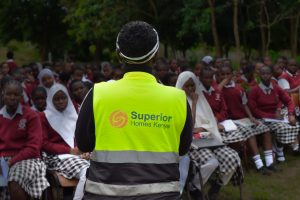
Superior Homes Kenya (SHK) exemplifies how companies with CSR programs in Kenya address poverty and inequality. Through Superior Homes Foundation, SHK has implemented programs that provide sanitary pads and mentorship to school going girls surrounding all it’s environs, thereby reducing school absenteeism and empowering young girls to achieve their potential. Superior Homes Foundation has made strides and is currently supporting more than 10,000 students across Kenya. The mentorship sessions and donation of sanitary towels align with SDG No. 4: Quality Education, as well as SDG No. 5: Gender Equality. The foundation is keen on reaching more students to help alleviate poverty as well as promote gender equality. Furthermore, SHK’s commitment to sustainability and community development demonstrates how businesses can integrate CSR into their operations for long-term impact.
CSR is not merely a charitable act but a strategic approach to creating shared value. It requires deliberate planning, stakeholder engagement, and consistent evaluation to ensure the initiatives address the root causes of poverty and inequality. Companies must align their CSR strategies with national and global development goals, such as Kenya’s Vision 2030 and the United Nations Sustainable Development Goals (SDGs), to maximize impact.
Corporate social responsibility projects in Kenya invest in initiatives that uplift communities and promote equity thus creating an inclusive and prosperous society. The example set by Superior Homes Foundation highlights the potential of CSR to transform lives and create sustainable development. As more companies embrace CSR, the collective effort can significantly reduce poverty and inequality, fostering a better future for all Kenyans.